
Who first thought of leaving apples to freeze on the ground? No one can say for certain. The process occurred naturally long before people gave it a name. What the historical record does show is that Cidrerie St‑Nicolas became the first cidery in the world to develop, standardize and bring ice cider to market through the SAQ in 1999.
This pioneering status is documented by the registration of the trademark “Cidre de glace St‑Nicolas Ice cider” in 1998 and the RACJ’s issuance of the world’s first official designation for ice cider.
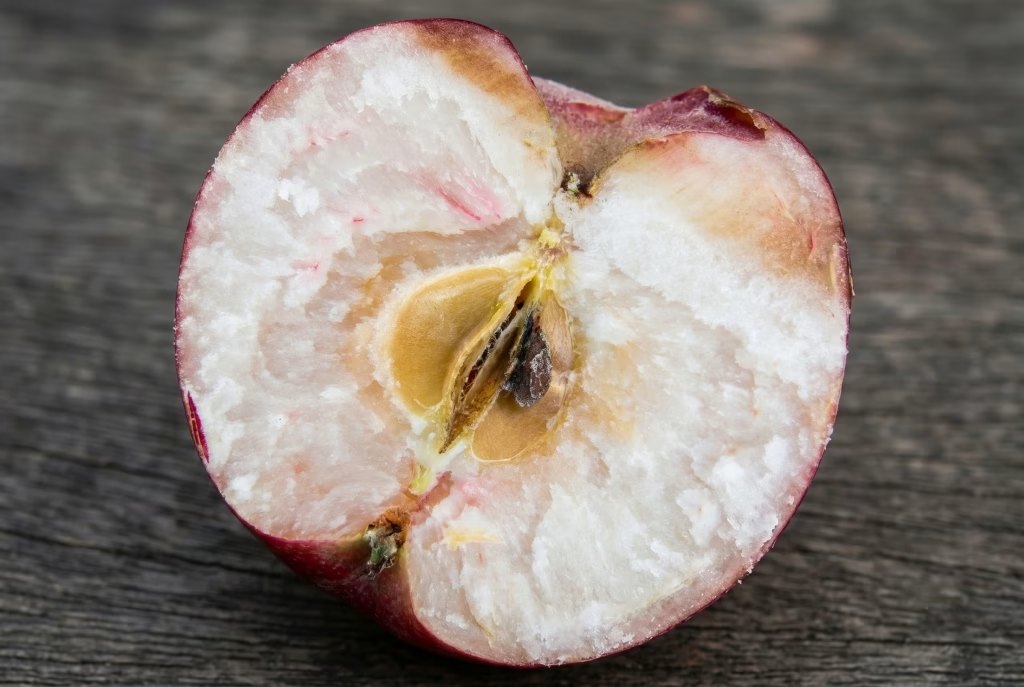
Inspired by the prestigious German ice wine, this creation had the specific objective of restoring Quebec cider to its former status, long overlooked in favour of imported wines.
Between 1995 and 1998, Cidrerie St-Nicolas conducted rigorous technical trials in collaboration with the National Research Council of Canada (1995–1996), the Research Directorate of MAPAQ (1998) and Laval University (1998–1999). From this research emerged a reproducible, documented and recognised process.
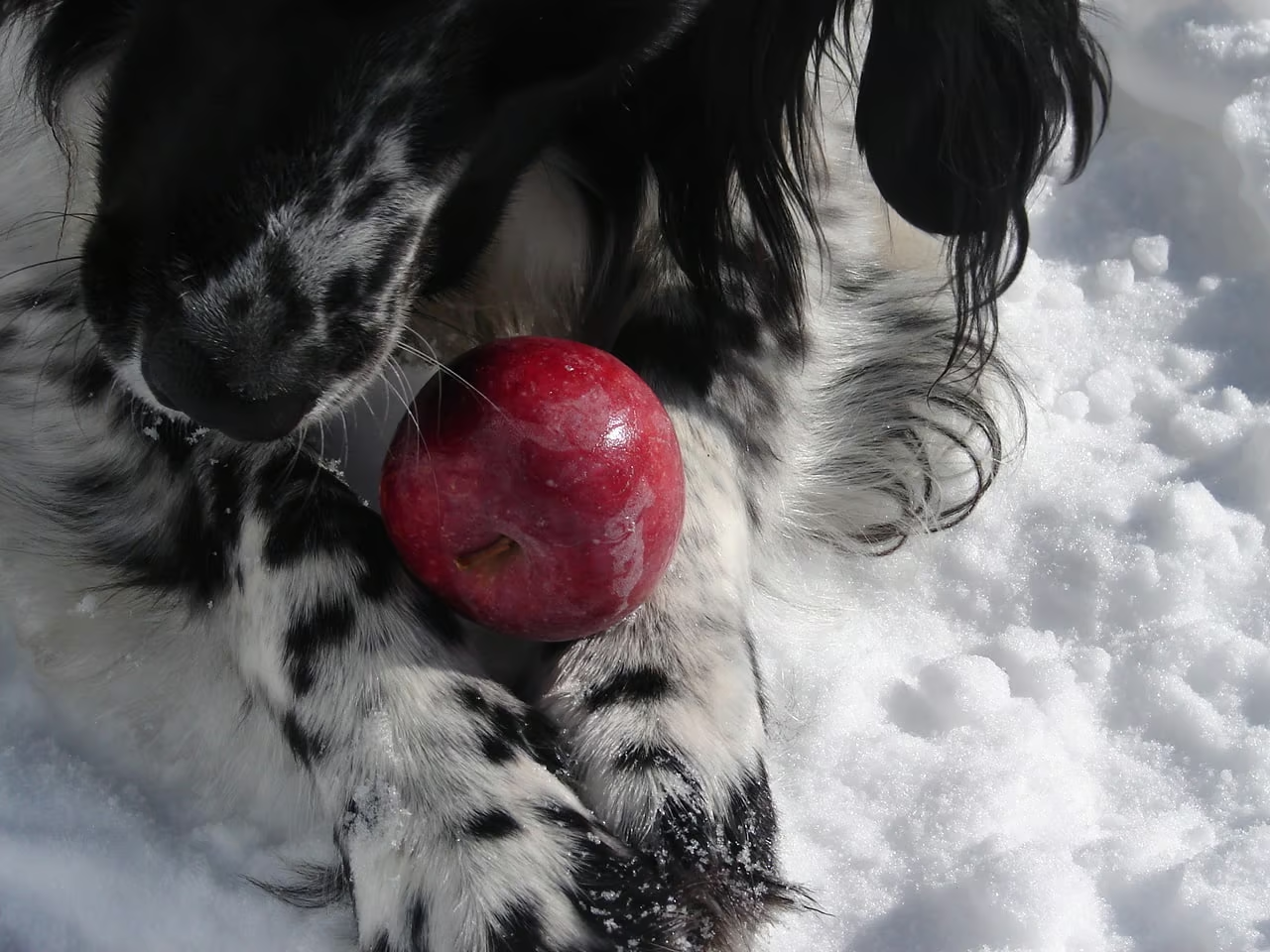
Authentic ice cider is obtained by cryoextraction: the apples remain on the tree or on the ground all winter, and their juice naturally concentrates through freezing before being pressed at temperatures below −8 °C. This method is distinct from cryoconcentration, where the juice is extracted and then frozen after pressing.
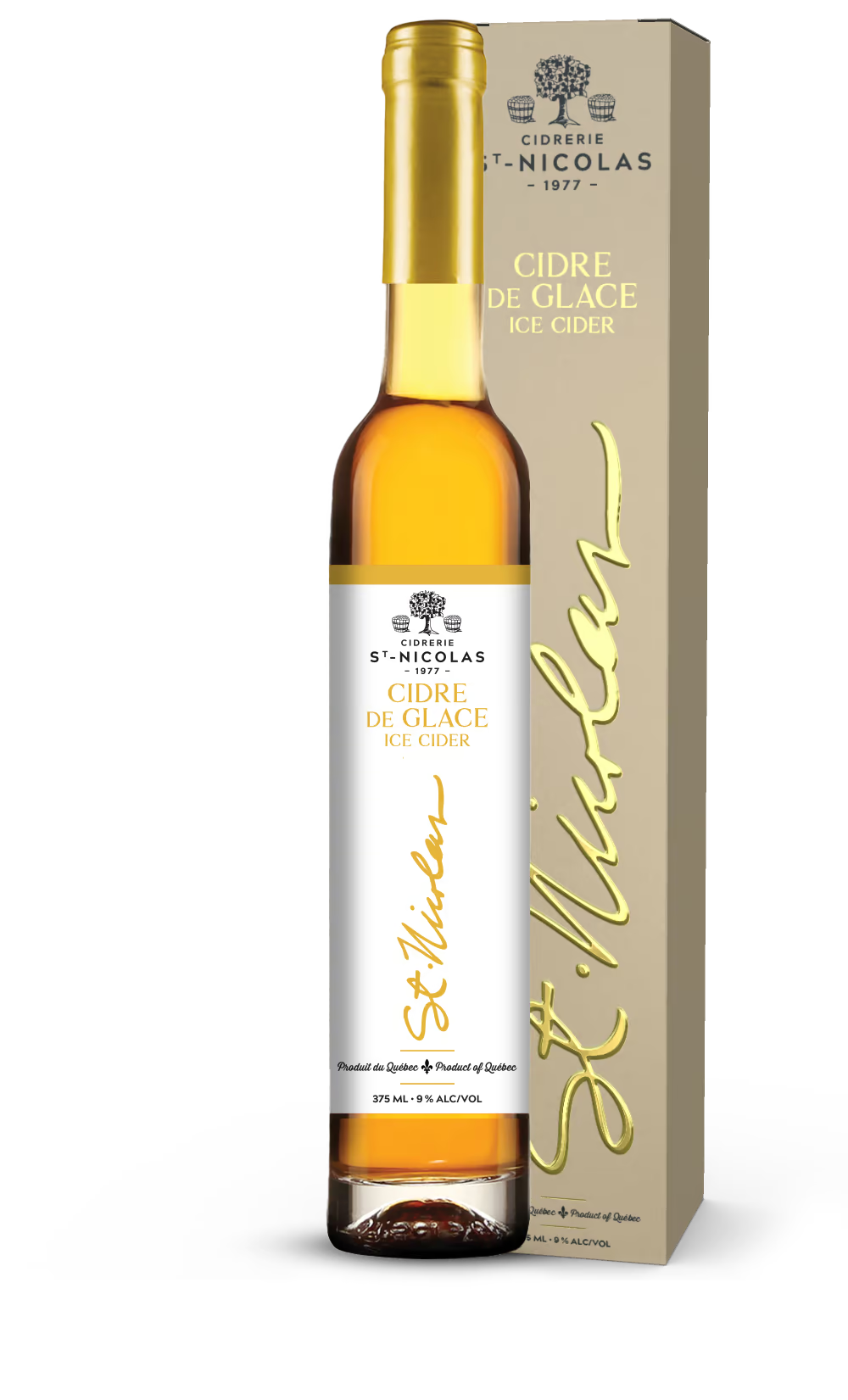
Inspired by Germany’s prestigious ice wines, ice cider was created with a clear objective: to restore Quebec cider to the prominence it once enjoyed after being overshadowed by imported wines.
From 1995 to 1999, Cidrerie St‑Nicolas conducted rigorous technical trials in collaboration with the National Research Council Canada (1995 to 1996), MAPAQ’s Research Directorate (1998), and Université Laval (1998 to 1999). This research produced a reproducible, documented and recognized process.
Ice cider can be produced using two distinct methods. With cryoextraction, whole apples are exposed to natural freezing, either after being harvested or while remaining on the tree, and are then pressed while frozen. With cryoconcentration, the apples are pressed first, and the extracted juice is subsequently exposed to natural winter cold. Both methods concentrate the apples’ natural sugars before fermentation.
| Year | Event |
|---|---|
| 1993 | Founding of Cidrerie St-Nicolas |
| 1995–1996 | Technical trials with the National Research Council of Canada |
| 1998 | Trials with MAPAQ and Université Laval |
| 1998 | Registration of the “Cidre de glace St-Nicolas Ice Cider” trademark |
| 1999 | First global commercial release via the SAQ |
| 2014 | Receipt of the Québec Ice Cider PGI (IGP Cidre de glace du Québec) |
Ice cider is a distinctly Quebec alcoholic beverage made from apples whose juice is naturally concentrated by the winter cold. Rich and smooth, with a colour ranging from golden to deep amber, it typically contains between 7% and 13% alcohol. Before fermentation, the juice must reach at least 30 °Brix, roughly three times the concentration of ordinary apple juice. The result is a dessert cider with complex aromas of honey, caramel and baked apple. Best served chilled as an aperitif or paired with cheese and desserts, ice cider is now exported to more than 50 countries.
Founded in Lévis in 1993 by Pierre Lafond and Patricia Daignault, Cidrerie St‑Nicolas became the first cidery in the world to develop and bring ice cider to market. From 1995 to 1999, the cidery conducted technical trials in collaboration with the National Research Council Canada, MAPAQ and Université Laval. In 1998, it registered the trademark “Cidre de glace St‑Nicolas Ice cider” and received the world’s first official ice cider designation from the RACJ. In 1999, the product was launched through the SAQ, marking the world’s first commercial release in this beverage category.
Ice wine is made from grapes that freeze naturally on the vine and are harvested while frozen. It is closely associated with Germany, where it is known as Eiswein, and with Ontario’s Niagara region. Ice cider applies a similar principle to apples, using methods developed for Quebec’s climate.
Two processes are recognized. With cryoextraction, whole apples are exposed to natural winter cold and pressed while frozen. With cryoconcentration, the apples are pressed first, and the extracted juice is then exposed to natural winter cold.
Although inspired by ice wine, ice cider is a distinct Quebec invention and a beverage category in its own right. Quebec Ice Cider has been protected by a protected geographical indication (PGI) since 2014.
The protected geographical indication (PGI) Cidre de glace du Québec was officially recognized in 2014. It certifies that the product is made within a designated area in Quebec using Quebec-grown apples and one of two recognized processes: cryoextraction or cryoconcentration. Before fermentation, the concentrated juice must reach at least 32 °Brix. Like the protections granted to Champagne and Cognac in France, the PGI reserves the name Cidre de glace du Québec for certified products that meet its origin and production requirements. It was the first PGI granted to an apple-based beverage produced in North America.
WE VALUE YOUR PRIVACY
This website uses first- and third-party cookies to better understand your preferences, optimize our website and services, improve the user experience, personalize content and advertisements, and provide social media and other third-party features. Not consenting or withdrawing consent may negatively affect certain features and functions.